How hotels welcome guests in 2026: pre-arrival communication, arrival rituals, multilingual reception, and the operational choices that turn first impressions into reviews.
The first 90 seconds of a stay do most of the work. A guest greeted by name, with a real smile, by a concierge, receptionist, hostess or a digital concierge already feels like the property was expecting them. That feeling is what loyalty is built on. "Hello" alone won't do it. Recognition will.
Most of the magic is in the small stuff. A guest mentions green tea on the booking form and finds a tin in the room the next afternoon. A culture-curious visitor gets a hand-marked map to the gallery district. None of these gestures are expensive. They just signal that someone read the file. Tech helps here too: a virtual concierge for hotels means the guest can ask for the same info at 02:00 without anyone losing sleep.
Every hotel has a back story. Old guests, local legends, the reason that one corridor is shaped the way it is. Properties that share these stories give guests something to take home that the competitor down the street can't replicate. The stay stops feeling generic and starts feeling specific to that building, that town, that team.
A taste of the region works: a local pastry, a regional tea, a small pour of something distilled three streets away. So does the unexpected: a handwritten note, a room set up the way the guest told the booking form they liked it, a tip about a Tuesday market the concierge swears by. None of this is rocket science, but it lands. Some ideas that have worked across properties:
Together these go past the standard welcome script and create stays guests still talk about months later. Staff tend to enjoy delivering them too, which is a quiet bonus.
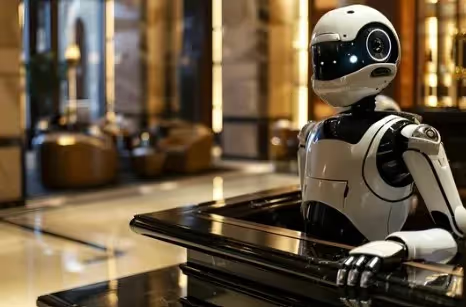
Tech and hospitality are blending fast. Digital check-in suits the traveller who lands at midnight and just wants the room. AI quietly preps the experience around guest history. Contactless extras like mobile keys and voice controls are no longer novelties; new guests expect them. Some specifics worth flagging:
These tools deliver convenience, but the real value is what they free your team to do. Less time on routine tasks, more time on the guest standing at the desk. As the stack matures, the welcome will keep evolving, and operators who pair the gadgets with strong human service will keep winning.
Hospitality sits at a real crossroads. The question isn't whether to adopt the tech, it's how to adopt it without flattening the human service that defines the category. Staff training matters more than software selection. Get the team comfortable with the tools, and the guest never sees the seam. VR for room previews and AR for in-room storytelling will reshape what "welcome" looks like over the next few years.
Welcoming guests is an evolving craft. From the basics, a real greeting and an eye for detail, through to the AI-driven layers on top, the goal hasn't changed. Make every guest feel expected and looked after. The tools change. The intent doesn't.
.avif)
Most hotels now offer online check-in. You can typically check in via the hotel's app or website up to 24 hours before arrival, and at many properties this lets you skip the front desk and head straight to your room.
In many modern hotels, yes. Rooms come equipped with smart tech that lets you control lighting, temperature, and entertainment from your phone or a provided tablet.
Many do. Hotels use AI to read your preferences and surface activity and dining suggestions, and some run virtual concierges or chatbots that handle suggestions and reservations on the spot.
A great welcome blends personalisation, speed, and warmth: pre-arrival communication that sets expectations, smooth digital or in-person check-in, multilingual reception, a room ready to guest preferences, and one unexpected gesture like a welcome amenity or room note. The test: does the guest feel expected by name within five minutes of arrival?
Pre-arrival data capture flags preferences (dietary, accessibility, occasion), the PMS enriches the guest profile with stay history, and the AI Operator drafts personalised welcome messages and handoffs to the right department. Templates, PMS context, and a 30-second human review by the front desk give personalised welcomes for every guest, not just VIPs.
Yes, especially on first impressions. Amenities don't need to be expensive: a handwritten note, a locally-sourced item, or a well-staged room based on preference data lifts review tone more than generic chocolates. Sustainability-positioned amenities outperform luxury-positioned ones in 2026 reviews across most segments.
.avif)