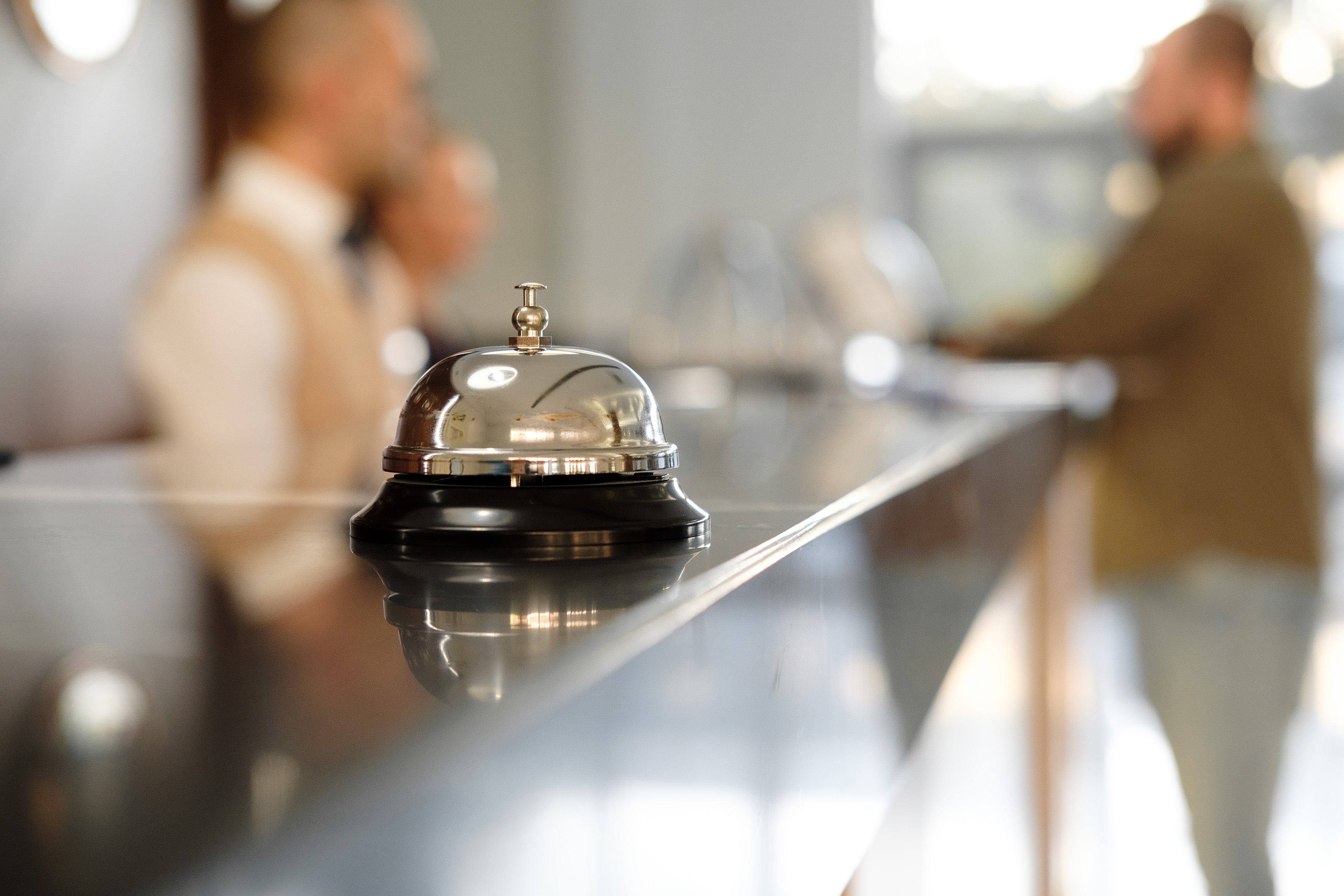
How hotel front desk operations drive customer satisfaction in 2026 — staffing rhythms, response time discipline, escalation playbooks, and the metrics that move scores.
The hotel front desk is still one of the most influential touchpoints in hospitality. It shapes first impressions, sets expectations, and often decides how a guest scores the whole stay. Research consistently puts the front desk's contribution to total guest satisfaction somewhere between 20–40%. That makes it an obvious focus for any property serious about experience, loyalty, and review scores.
The desk is the face and the voice of the property. Every check-in, every question at the counter, every complaint at 23:00 colours how a guest sees the hotel. One interaction can either confirm professionalism or expose weak communication systems behind the scenes.
Efficient check-in and check-out are basics, not differentiators. Guests want clarity and speed. They don't want forms and they don't want delays. Tech matters here: pre-arrival registration, mobile check-in, and instant payment authorisation cut the queue. But even with automation in place, the human element still does most of the emotional work. A warm greeting, the guest's name said correctly, calm professionalism. Those are what stick.
Guests remember tone and body language far more than procedures. Front desk staff who pay genuine attention set the emotional tone for the rest of the stay. Empathy turns routine service into hospitality. Recognising repeat guests, responding quickly when something is off, offering proactive help: it all builds a sense of care that pulls people back.
How staff respond when something goes wrong is what really decides whether a guest returns.
Operationally simple. Psychologically very strong.
First impressions shape how guests judge everything else. A friendly, efficient welcome creates a halo effect: guests read the rest of the stay more positively, even if minor issues come up. The reverse holds too. A stressful check-in can sour every interaction afterwards.
People are social, and emotion travels fast. Warm, confident energy from staff transfers to guests and creates a calmer atmosphere. Indifference or visible stress does the opposite. Hotels with emotionally intelligent service at the desk tend to see better review sentiment, even without major facility upgrades.
Predictability lowers traveller stress. When guests know what to expect (clear communication, clean processes, timely responses) they relax. A front desk that delivers that consistency gives guests the quiet confidence that the rest of the stay will go smoothly.
A growing number of hotels now pair human hospitality with AI on the operational side. An AI Hospitality Assistant handles routine messaging before and during the stay. FAQs, check-in details, checkout instructions. That frees front desk staff to focus on the people in front of them.
That split lets the human team focus on empathy, conflict resolution, and service recovery, the tasks that genuinely need judgement and emotional intelligence.
Technology only improves service when staff feel confident using it. Training should cover technical proficiency (the AI tools, the systems) alongside emotional intelligence (communication, listening, tone). Scenario-based sessions that simulate real guest interactions work better than scripts. Managers should encourage staff to respond with autonomy, not memorised phrases.
The future of the front desk is hybrid. AI handles scale, humans handle empathy. The combination produces consistent, high-quality service without burnout or wasted hours. Guests feel recognised and supported, and operations stay lean. (And honestly, the staff are happier too. Fewer 02:00 "what's the Wi-Fi password" calls.)
Viqal's AI Hospitality Assistant automates key guest touchpoints and connects directly to the PMS. It handles pre-arrival confirmations, stay updates, and departure messaging in natural language through WhatsApp and other channels. The result: less workload for front desk teams and instant, accurate responses for guests. The human element that defines real hospitality stays where it should: at the desk, with the guest.
The front desk is the emotional and operational centre of a hotel. Pair empathy-driven service with an AI Hospitality Assistant and you get faster responses, cleaner processes, and more human guest experiences. So why are so many properties still treating training and tech adoption as an afterthought? The ones that don't turn the front desk into a long-term competitive advantage that pays off in satisfaction, loyalty, and reputation, stay after stay.
.avif)
Technology smooths check-in through mobile apps for direct room access, self-service kiosks, and automated messaging that informs guests about their options. The result is better efficiency and a calmer arrival.
Hotels should outline check-in options, including any associated fees, on their website, in booking confirmations, and through pre-arrival messages. Guests can then plan their arrival without surprises at the counter.
Charging for flexible check-in can offset potential revenue losses, but the trade-off needs careful thought. Weigh the impact on guest satisfaction and competitive positioning before adding the fee.
Three metrics dominate: average check-in time (target under 4 minutes), first-response time on guest messages (target under 60 seconds), and recovery time on reported issues (target under 20 minutes). Properties hitting all three consistently land in the top quartile of review scores in their segment.
Train on the AI tool first (week 1), then on guest interaction with the AI in the loop (weeks 2-3), then on edge cases and escalation (week 4 onwards). Don't teach the tool and the soft skills at the same time. Staff need to feel confident in the tool before layering it into live interactions.
Yes, when AI absorbs routine message volume and mobile check-in handles arrival peaks. Most independent properties under 100 keys can reduce front desk hours by 20-40% while maintaining or improving review scores, provided digital coverage handles overflow with the same response quality.
.avif)